
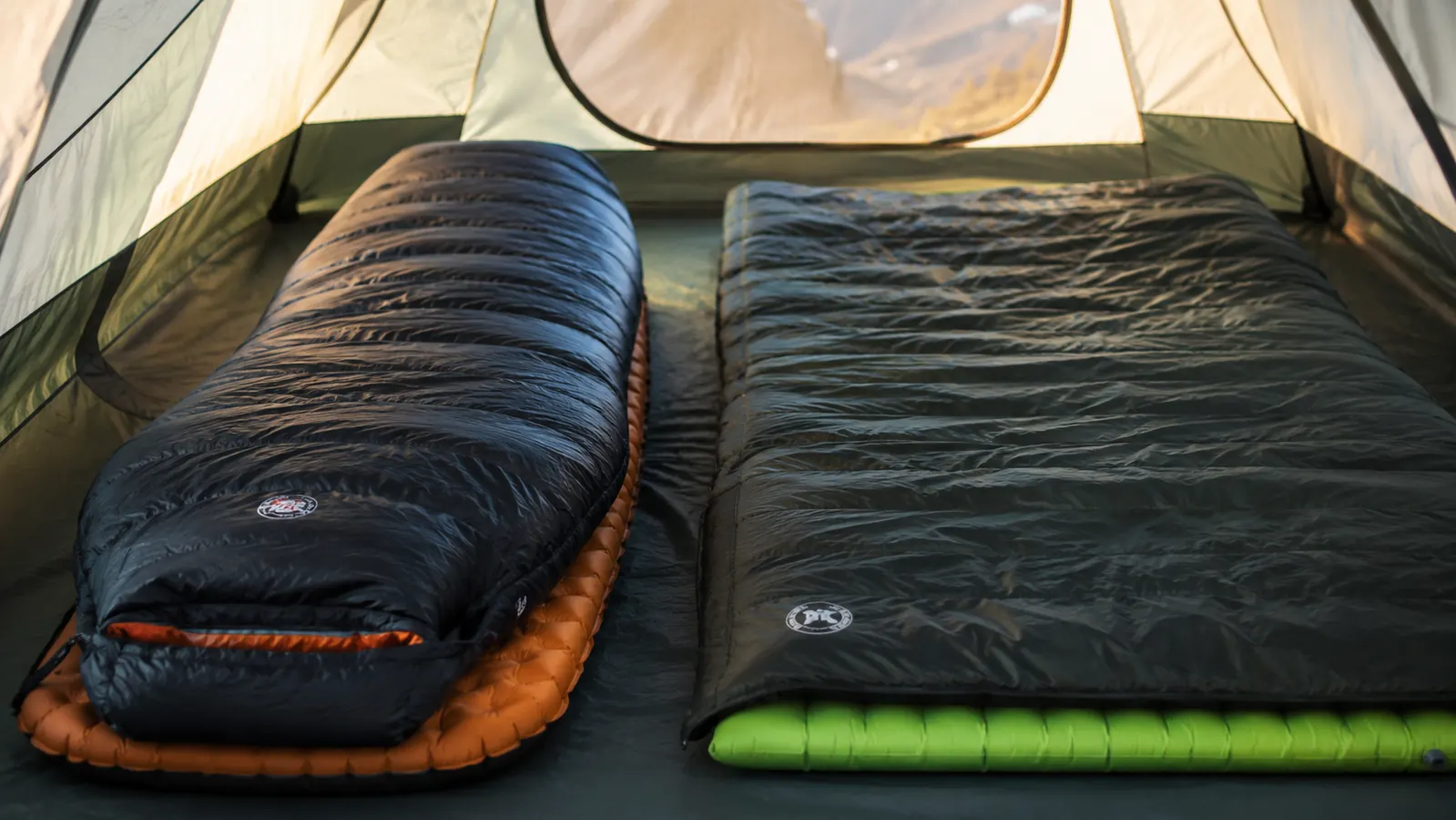
If you are shopping for a budget mummy sleeping bag and you have narrowed it down to the TETON Sports TrailHead and a Coleman mummy-style bag, I can save you some time. I have camped with both in Colorado, including a September trip near Buena Vista where overnight temps dropped to 22 degrees. The short answer: the TETON TrailHead is the better bag for anyone who sleeps cold, camps in shoulder season, or wants a bag that will last more than a few trips. But the Coleman has its place, and I will tell you exactly what that looks like.
Both bags sit in the mid-price range depending on when you buy. Both are mummy-cut, synthetic fill, and marketed toward car campers and beginner backpackers. That is where the similarities start to thin out. The differences show up in temperature rating accuracy, hood construction, zipper quality, and how much loft each bag holds after a season of use. Those details matter a lot when you are trying to sleep at elevation in a state where September nights routinely ignore the calendar.
| TETON Sports TrailHead | Coleman Mummy Bag | |
|---|---|---|
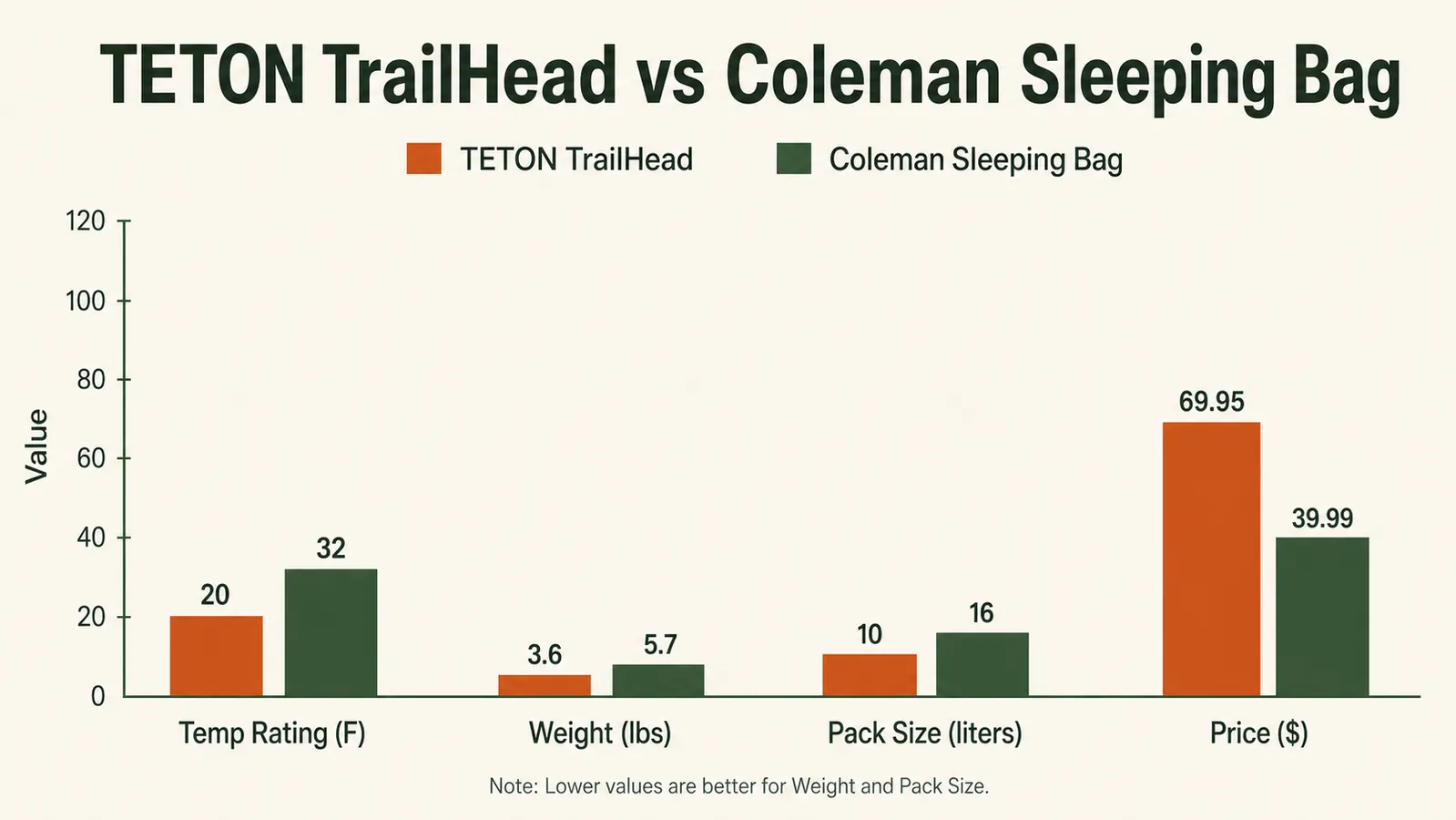
| Temperature Rating | 20 degrees F | 32 degrees F (0 degrees C) |
| Fill Type | SuperLoft Elite synthetic | CozyLoft synthetic |
| Shell Material | Ripstop polyester taffeta | Polyester taffeta |
| Approximate Weight | 4.5 lbs (2.0 kg) | 4.1 lbs (1.9 kg) |
| Packed Size | Medium-large, includes compression sack | Medium, drawstring stuff sack |
| Hood Design | Full cinchable mummy hood with internal draft collar | Basic cinch hood, no draft collar |
| Zipper Baffles | Dual baffles with snag-free zipper | Single baffle, zipper snags reported |
| Shoulder Season Use | Reliable down to 25 degrees F in my testing | Comfortable to about 40 degrees F in practice |
| Amazon Rating | 4.5 stars, 1,735 reviews | 4.3 stars, high review volume |
Where the TETON TrailHead Wins
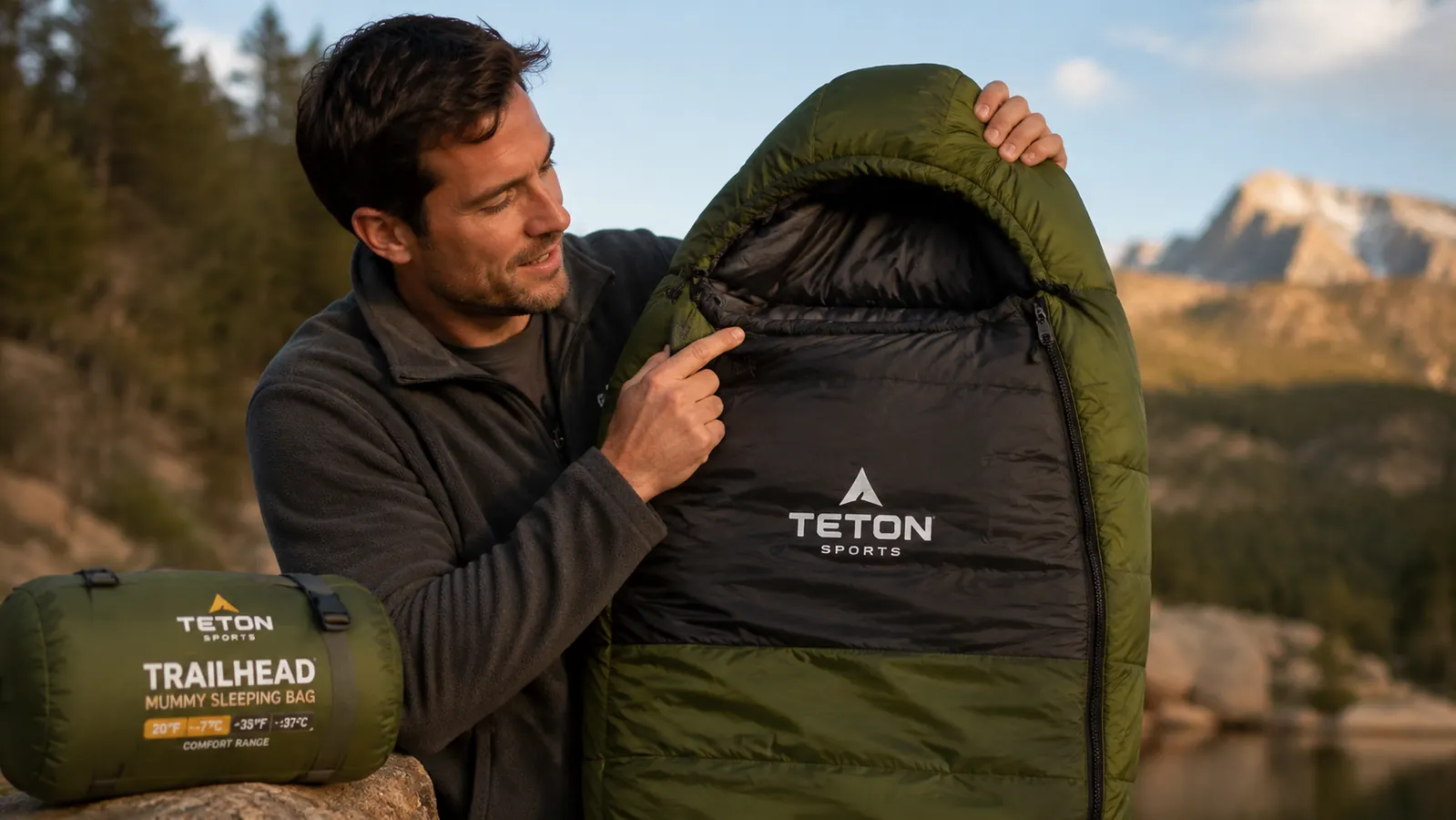
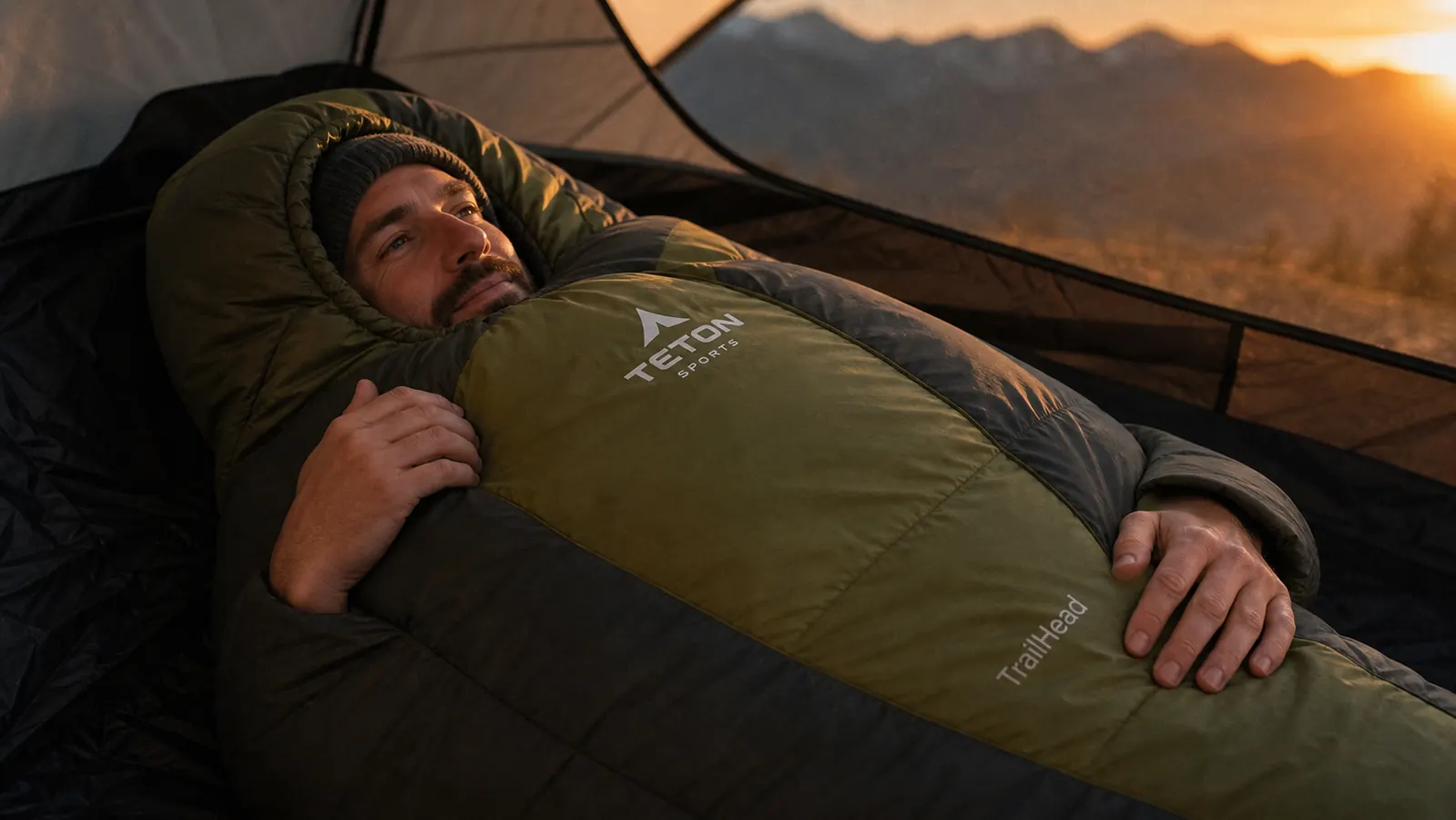
The most important number on any sleeping bag is the temperature rating, and the TETON TrailHead's 20-degree rating is the real reason to choose it. Most budget sleeping bags list a temperature rating that reflects survival conditions, not comfort. The TETON comes closer to an actual comfort rating than most bags in its price range. On my Buena Vista trip, temps hit 22 degrees and I slept in a base layer and light fleece pants without waking up cold. That is not something I can say about most budget bags.
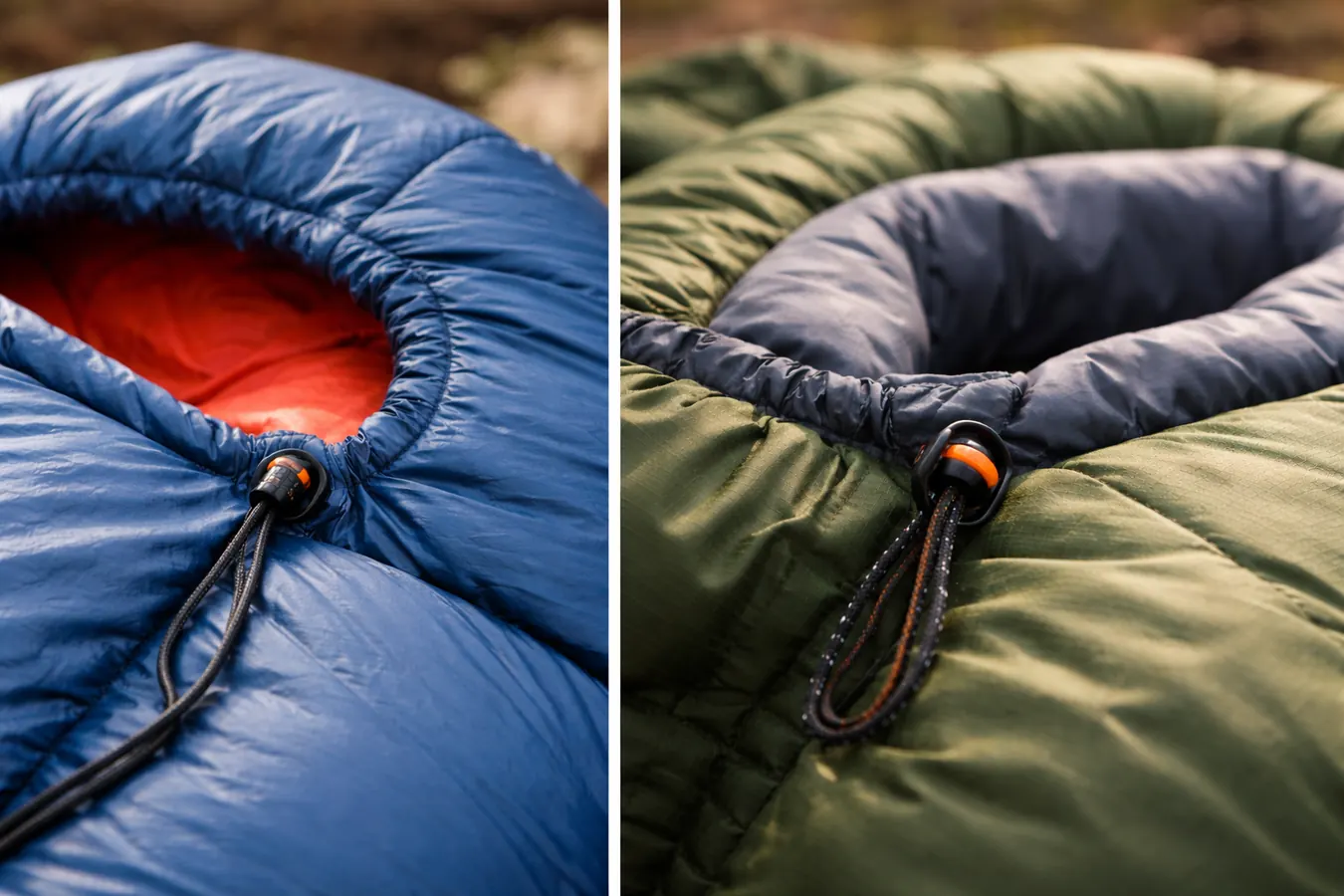
The hood and draft collar combination is what separates this bag from the Coleman on cold nights. The TrailHead has a full mummy hood with a drawstring cinch and a secondary draft collar at the shoulder that seals heat around your neck. You lose a massive amount of body heat through an open hood gap, and the TETON's design addresses that directly. The Coleman's hood is a simpler cinch-only design with no draft collar. Fine for summer. Not what you want when temps drop into the 20s.
Where the Coleman Wins
The Coleman bag has a real advantage if your camping is strictly three-season and you stick to summer trips where overnight lows stay above 40 degrees. It is slightly lighter than the TETON (a few ounces, which matters if you are gram-counting on trail), and the packed size on some Coleman models compresses a bit smaller. If you are buying a bag for car camping in July and August at lower elevations, the Coleman will handle that just fine at a price that might be a few dollars less depending on the sale.
Some Coleman mummy bags also include a fleece interior liner on certain models, which adds a softer feel against skin that some people prefer. If you camp warm, sleep warm, and prioritize comfort texture over temperature performance, that is a reasonable tradeoff. I just would not want anyone relying on a Coleman mummy bag for a September night in the Rockies and being surprised at 2 a.m. when the cold wakes them up.
Cold nights don't care about your savings. The TETON TrailHead costs less than a hotel room and actually works at 20 degrees.
Over 1,700 campers have tested this bag in real conditions. Check today's price on Amazon and see if it fits your budget.
Amazon Check Today's Price on Amazon →On a September night near Buena Vista at 22 degrees, I slept through until 6 a.m. in the TETON TrailHead. That is what a real temperature rating looks like.
Warmth Where It Counts: Fill and Construction Details
The TETON's SuperLoft Elite fill is a proprietary synthetic insulation that the brand has used across its TrailHead line for years. I have had my TrailHead for going on three seasons and the loft has held up better than I expected. Synthetic fill does eventually compress and lose warmth retention, but the TETON holds its shape through repeated compression in a stuff sack better than comparable fills I have tried from less specialized brands. The Coleman's CozyLoft fill works well when it is new, but I have seen it flatten faster with heavy use.
The zipper is another area where the TETON earns its rating. The TrailHead's zipper runs smooth with a dual baffle behind it that blocks cold air infiltration along the zip line. This is a detail that gets overlooked until you are in the bag at 3 a.m. and there is a cold draft running straight up the seam. Coleman's zipper has been reported to snag more frequently by owners, and the single baffle design lets more cold in through the zip line on frigid nights. Not a dealbreaker for summer camping. Absolutely matters in cold weather.
Packability and Weight for Backpackers
Both bags are on the heavier end for backpacking. At roughly 4.5 pounds, the TETON TrailHead is not what I would bring on a long-distance trail where every ounce counts. The Coleman is similarly heavy. If you are car camping or doing base camp trips where you are not carrying your kit more than a half mile, the weight difference between the two bags is basically irrelevant. Pick the one that keeps you warm.
The TETON includes a compression sack, which helps significantly. A non-compressed mummy bag takes up a surprising amount of space in a pack or trunk. With the compression sack cinched down, the TrailHead packs to a manageable cylinder that fits in the bottom of a 50-liter pack. The Coleman typically ships with a drawstring stuff sack, which works but does not compress as tightly. For car campers, this is a minor point. For anyone hauling gear more than a few minutes from the car, the TETON's compression sack is genuinely useful.
Durability After Multiple Seasons
I have been harder on gear than most people. I run it through dusty campgrounds, stuff it damp when I have no choice, and I do not baby the zippers. My TETON TrailHead has survived that treatment over three seasons without a blown zipper, torn baffle, or shell puncture. The ripstop shell lives up to its name. A few snags along the way have not turned into tears. That speaks well to the material choice.
Coleman builds solid gear across most of its product line, and the mummy bag is a reasonable first sleeping bag. But the TrailHead's construction targets a more demanding use case. The seam tape, the zipper hardware, and the fill weight all suggest a bag built for someone who camps more than twice a year. If you camp two or three times a summer in mild conditions, either bag will survive you. If you are out six or eight nights a year in variable weather, the TETON is the one that holds together.
Who Should Buy Which
Buy the TETON Sports TrailHead if you camp in shoulder season, camp at elevation, run cold, or want a bag that will last more than a couple of seasons. The 20-degree rating with real-world accuracy means you are covered from late spring through early fall at most Rocky Mountain campgrounds. At its current price on Amazon, it beats comparable temperature performance from brands that charge twice as much for the same fill weight.
Buy a Coleman mummy bag if you are a strict summer camper at low-to-mid elevations, you sleep warm, and you know you will not be pushing past 40-degree nights. It is a capable bag for what it is designed for. Just do not take it to a Colorado campground in October and expect to be comfortable. The temperature gap between these two bags is not marketing copy. It is a real difference you will feel.
The TETON TrailHead has 1,735 reviews and a 4.5-star rating because it works at the temperatures it claims. See today's price before your next trip.
Whether you are heading out this weekend or planning a fall trip, getting the bag right is the single most important gear decision you will make. The TETON TrailHead is the right call for most Colorado-season campers.
Amazon Check Today's Price on Amazon →