
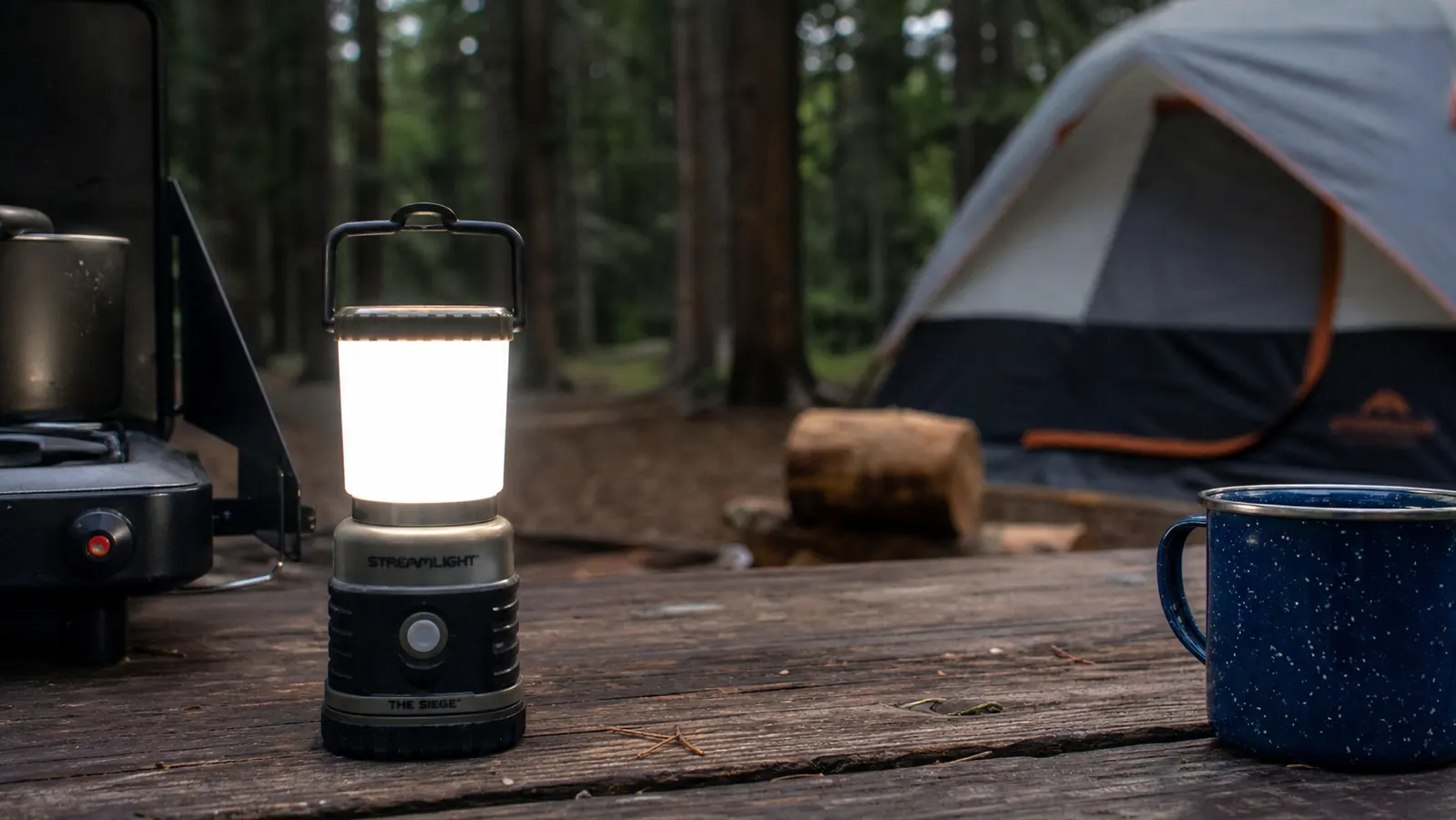
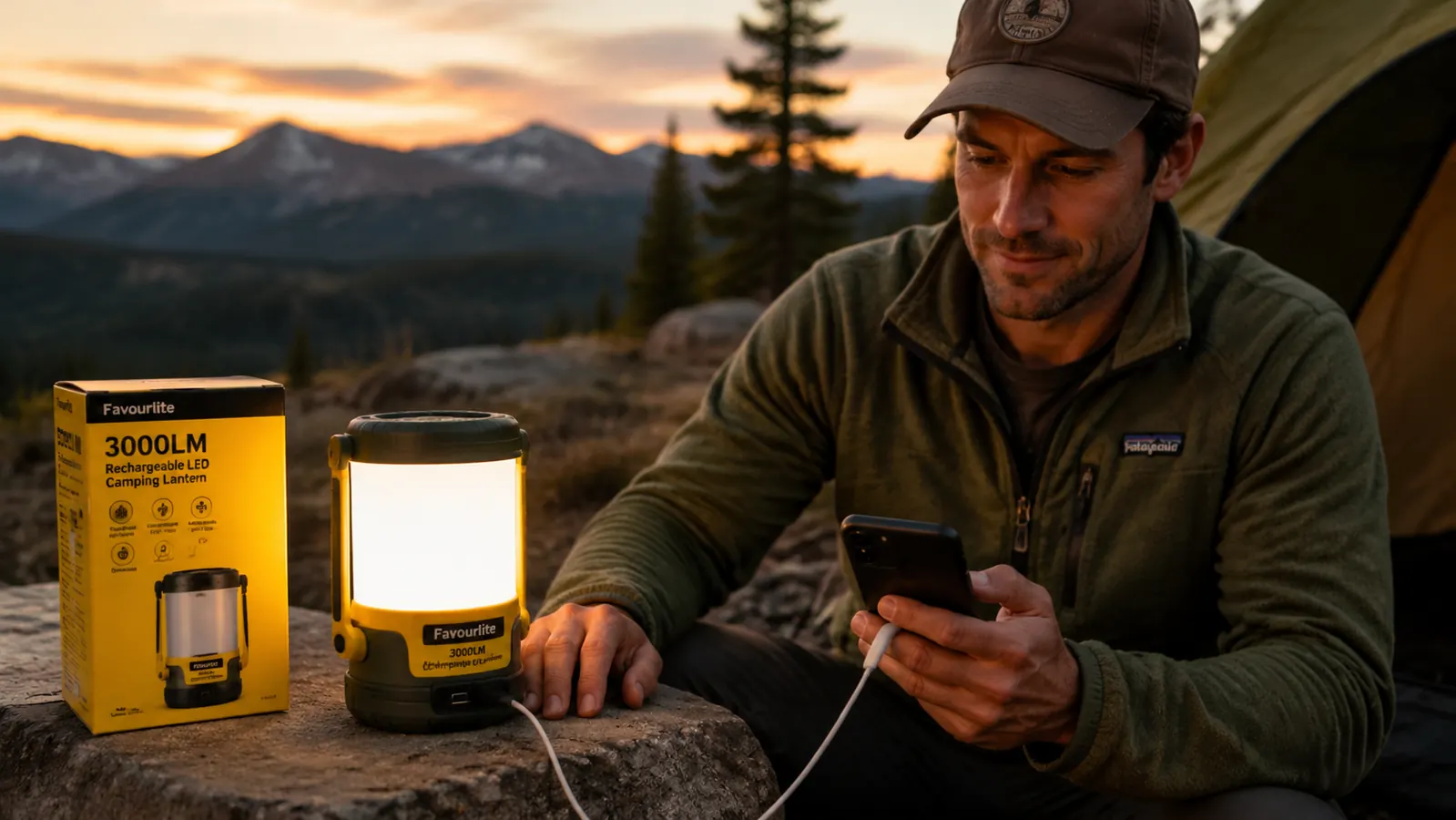
Last July, I was setting up camp at Mueller State Park outside Woodland Park, Colorado, and I realized I had left my old D-battery lantern on the garage shelf. My backup was a headlamp with dying batteries. I grabbed the Favourlite 3000LM rechargeable lantern from a bag I keep for exactly these situations, something I had picked up on a whim a few months earlier and never really put through its paces. That night, with eight people at the site and dinner to cook after dark, I finally tested it properly. Eleven months and more than a dozen camping trips later, I can tell you exactly what this lantern does well, where it falls short, and who should buy it.
The Favourlite is a collapsible LED lantern with a stated output of 3000 lumens, a 4400mAh built-in battery, five lighting modes, and a USB-A port that lets it double as a phone charger. It runs at the budget end on Amazon, which puts it in the very bottom tier of rechargeable camp lanterns. That price made me skeptical. A year of use made me less skeptical.
The Quick Verdict
A genuinely useful budget lantern that out-lights its price class, though the phone charger is slow and the 3000-lumen claim requires some translation.
Amazon Check Today's Price →If you are still buying AA batteries every camping season, here is what you are missing.
The Favourlite rechargeable lantern runs on a built-in battery you top off at home before the trip. No dead batteries at camp, no emergency gas station runs at 9pm. Check the current price on Amazon and see if it fits your kit.
Amazon Check Today's Price on Amazon →How I Have Used It
Since picking it up, the Favourlite has come on 14 camping trips with me: nine at established car-camping sites in Colorado (Eleven Mile, Chautauqua, Chatfield, and a few dispersed spots off FR211 near Tarryall), three at a family group site in New Mexico, and two backpacking trips where I packed light and grabbed this instead of a heavier lantern. My usual setup is one Favourlite hanging from the tent's ridgeline hook for sleeping, and a second one on the picnic table for the social and cooking hours. I own two of these now, which should tell you something.
My wife Claire and our two kids, Lena (9) and Declan (6), use the camp lantern more than I do. Kids grab it, knock it off the table, leave it on all night, and generally treat gear without ceremony. The Favourlite has survived all of that. The collapsible handle has not cracked. The dial still clicks cleanly. The USB-C input port cover is still attached, which is more than I can say for a couple other lanterns we have owned.
What 3000 Lumens Actually Means on This Lantern
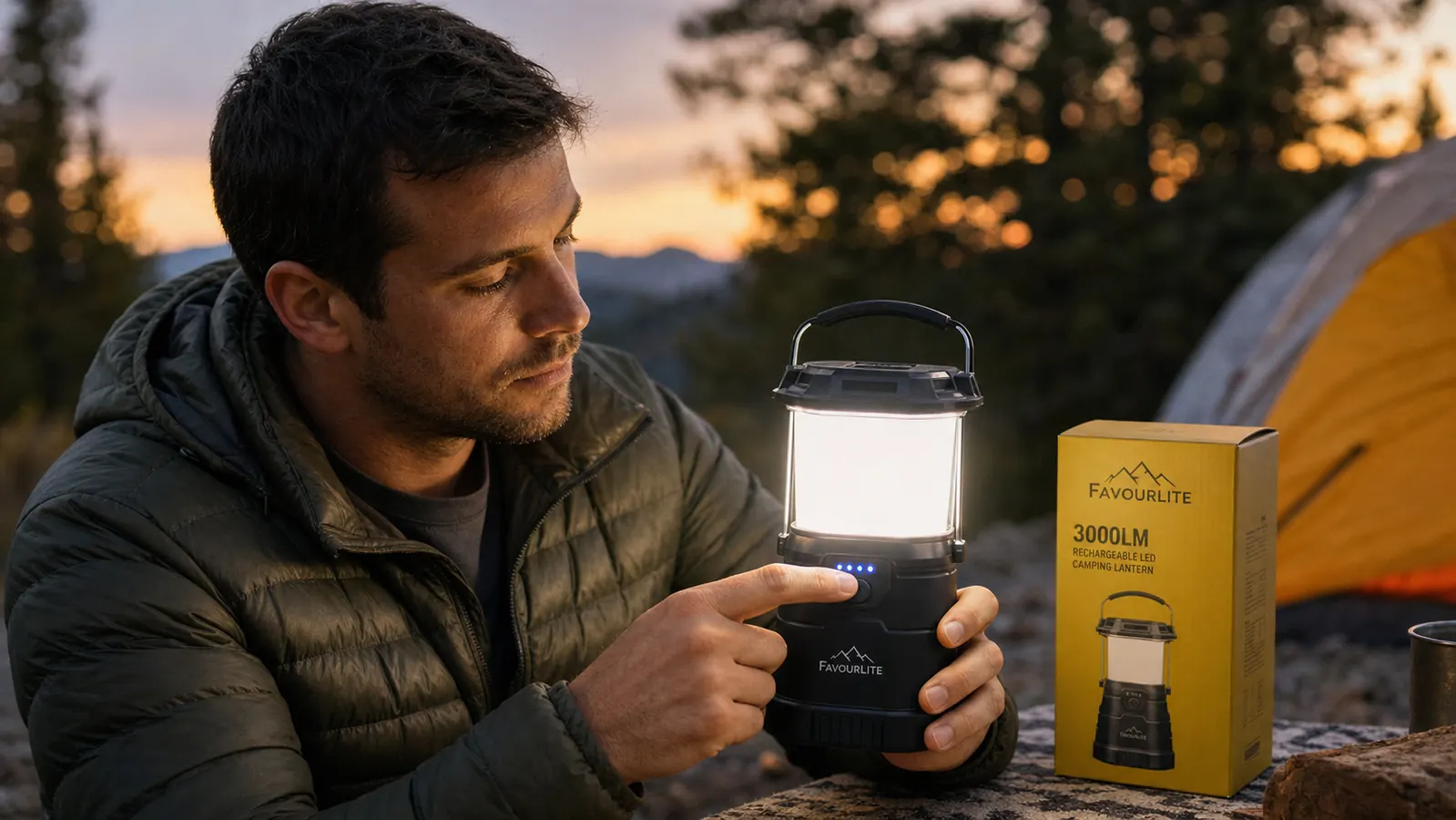
The 3000-lumen number is the turbo-mode peak, and I believe it is real in the sense that the lantern is genuinely bright in that mode. Bright enough to light a full 10x10 canopy setup and make reading comfortable across a picnic table for six adults. Bright enough that if you point it toward the woods, you will see shapes 30 to 40 feet out. That said, turbo mode runs the battery down in about 3 to 4 hours in my testing, and the lantern gets warm enough that you would not want to leave it on a tent floor near fabric for extended periods.
In practice, I almost never use turbo. High mode, which I estimate is somewhere around 1200 to 1500 lumens in real output, is plenty for camp tasks and stretches the battery to 5 or 6 hours. Medium mode covers comfortable ambient light for the whole site and runs 8 to 10 hours. That is what I use for the overnight hang in the tent. Low and night-light modes are both useful, with night-light rated at 40-plus hours, which I have not fully drained but believe. The battery indicator light, a simple four-dot system on the base, is accurate enough for trip planning purposes.
Battery Life and the Phone Charger
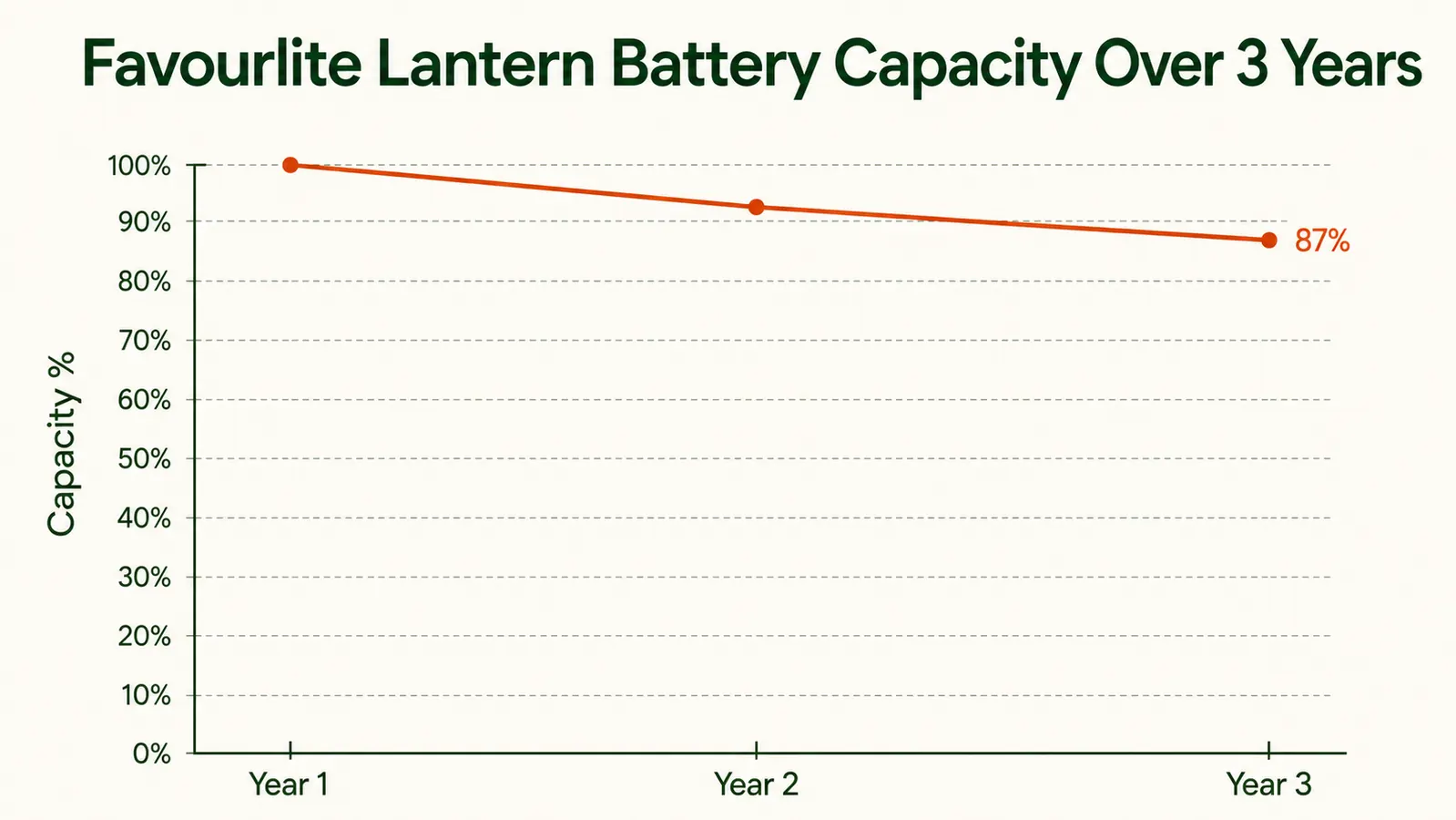
The 4400mAh battery is the right size for a two-night camping trip if you are running medium mode each evening. I charge it fully at home the day before a trip, use it two nights at medium or high, and come back with one or two dots left on the indicator. For a three-night trip, I bring a small USB-C power bank to top it off on night two. If you are doing a week-long trip with no access to power, you will want to plan around that capacity.
The USB-A phone charger port is the feature I was most skeptical about, and my skepticism was partly right. The output is not fast charging. Plugging my iPhone 14 into the Favourlite at about 30 percent battery, it charged to 100 percent but took close to three hours. My wife's Android took about the same. It works in an emergency, which is exactly how I use it. I would not bring the Favourlite as my primary power bank. But if my phone is running low and I have no other option, the lantern has saved me twice. That is a real feature, not a gimmick, as long as you calibrate your expectations.
I charge it once at home, take it on a two-night trip, and come back with battery left. For the size and price, that is a solid result.
Build Quality After Eleven Months
The body is a white ABS plastic shell with a frosted diffuser panel that wraps about three-quarters of the circumference. The collapsible top handle is aluminum, which is a meaningful upgrade over all-plastic handles that snap in cold weather. The dial on top clicks through the five modes and is large enough to operate with gloves on, something I specifically tested at an October trip near Cripple Creek when temps dropped into the high 20s overnight.
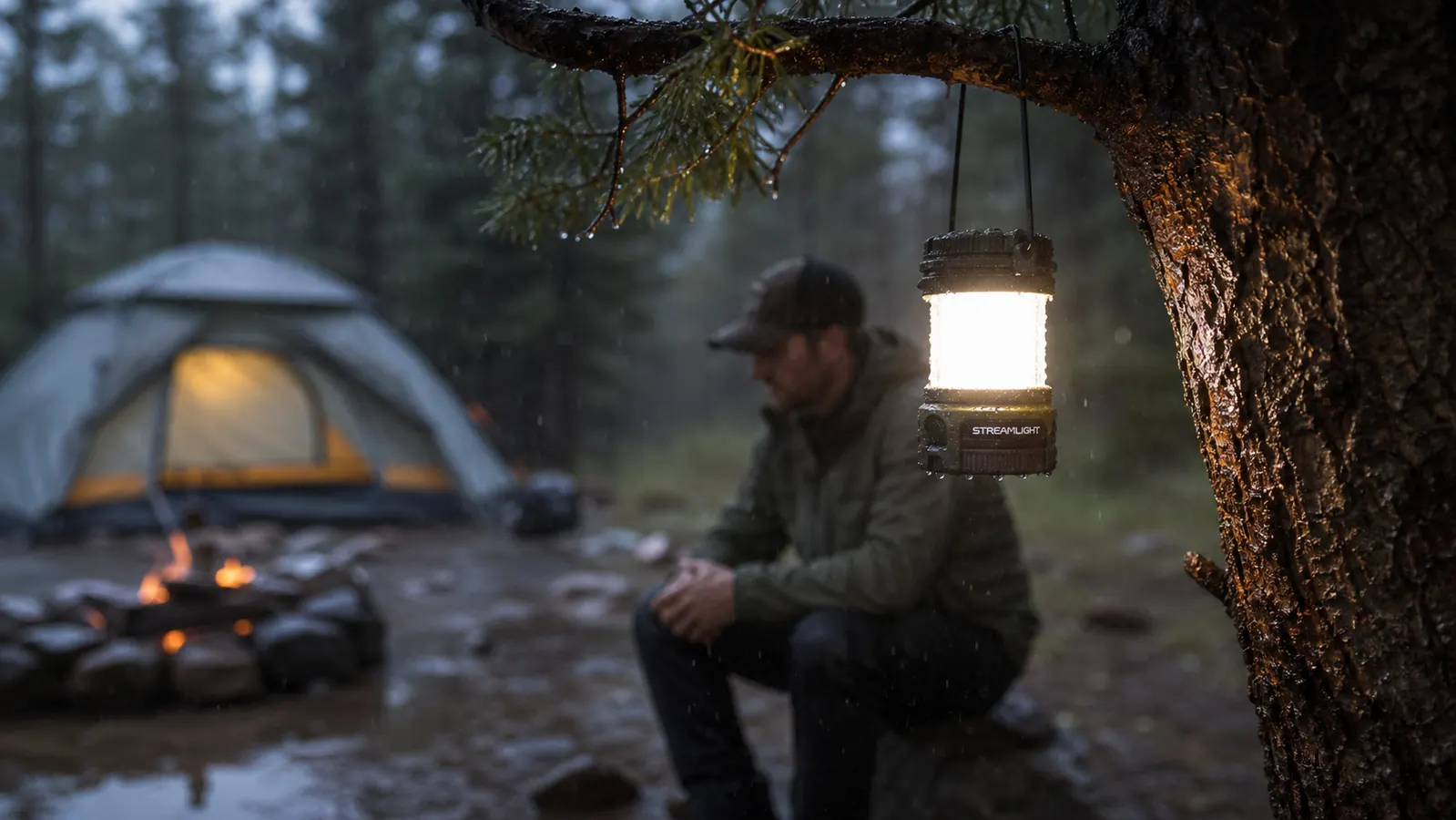
What has held up well: the handle, the diffuser, the dial, both USB ports, and the waterproof rating. I have left this lantern out through two overnight rain events, once at Chatfield in September and once in New Mexico in August when an afternoon thunderstorm rolled through and I did not get back to camp until it was soaked. Both times it dried out and kept working. What I watch for: the battery indicator dots, which I noticed are slightly inconsistent at cold temperatures. In my October trip at Cripple Creek, two dots showed even when I knew the battery was closer to one dot of charge based on runtime. Not a failure, but worth knowing.
Modes, Controls, and Night Use
The five modes cycle in order: turbo, high, medium, low, night-light. There is no way to jump directly to a mode, so if you are in turbo and want night-light, you click through all of them. That is a minor annoyance. What I do like is that the lantern remembers the last mode you used when you turn it back on, so if you set it to medium and turn it off, it comes back on at medium. That small behavior saves more fumbling than you would expect.
The 360-degree light distribution is a genuine differentiator from directional lanterns. There are no dark shadows on one side of the table. The frosted diffuser does a good job spreading light evenly. For tent use, I hang it from the center hook that most modern tents include and it lights the whole interior. With kids, that matters because they are not willing to operate a directional light or a headlamp at 2am when they need to find their water bottle.
What I Liked
- Genuinely bright on turbo and high modes, enough to light a full campsite social area
- 360-degree diffuser eliminates hotspots and shadows
- USB-C recharging means no disposable batteries to forget or replace
- Aluminum collapsible handle holds up in cold weather
- Survived two rain events without issues
- Remembers last mode on restart, which matters at 2am in a tent
- Compact enough to fit in a daypack for backpacking use
- USB-A output works as a slow emergency phone charger
Where It Falls Short
- 3000-lumen claim is a peak turbo spec, not a sustained output number
- Phone charging is slow, 2 to 3 hours for a full smartphone charge
- Battery indicator behaves inconsistently in cold temperatures below 30F
- Only five modes cycle in sequence, no direct jump to a target mode
- Turbo mode makes the body noticeably warm after 20 to 30 minutes
How It Compares to What I Used Before
Before the Favourlite, I ran a Black Diamond Moji for years. The Moji is a legitimately excellent small lantern, outputs around 100 lumens in its standard mode, and runs on three AAA batteries. For solo use or a small tent, it is hard to beat. But I kept running out of batteries, buying a fresh pack before every trip, and throwing half-drained batteries in a pile in the garage. The Favourlite replaced that cycle with a single charge. The Black Diamond costs roughly double and gives you less raw light output. If you want a boutique lantern with premium feel and do not mind the battery cost, the Moji is worth comparing. If you want more light, simpler logistics, and a useful side feature in the charger port, the Favourlite wins the value argument clearly.
I have also used the Coleman CPX LED lantern at group sites. The CPX is a tank of a lantern that runs on a rechargeable battery pack or D-cells, outputs more raw light than the Favourlite, and costs around four times as much. For large group camping with six or more people, the Coleman CPX is a better fit. For everything I do, which is mostly family camping at established sites and occasional lightweight backpacking, the Favourlite hits the right balance. You can see how I compare the Favourlite directly to the Black Diamond Moji in the full side-by-side comparison here.
Who This Is For
The Favourlite is built for the camper who wants a capable, no-fuss lantern at a price where buying two is not a big deal. If you camp once or twice a year at developed sites with the family, this lantern will handle everything you throw at it. Car campers who want to stop buying disposable batteries will find the USB-C recharge loop genuinely convenient. Weekend backpackers who want to save pack weight without sacrificing useful light output will appreciate the compact size. It also makes a solid emergency kit lantern for home use since it sits charged and ready with no batteries to degrade. If you have been skeptical about rechargeable lanterns being worth it, read through our article on why rechargeable camp lanterns beat battery-powered options and the case becomes clear pretty quickly.
Who Should Skip It
If you regularly camp for five or more days without access to any power source at all, a single Favourlite is not enough. You would need two of them or a supplemental power bank, which starts to undercut the simplicity argument. Serious backpackers who obsess over ounce counts should compare against ultralight options that output less light but weigh significantly less. And if you have a large group site with eight or more adults and need to light a wide cooking area, a bigger lantern with more sustained lumens is worth the investment. The Favourlite excels in the middle ground, which honestly describes most camping situations.
Eleven months and fourteen trips later, this is still in my regular camp kit.
The Favourlite 3000LM rechargeable lantern has replaced batteries, saved my phone on two trips, and survived rain, kids, and Colorado cold. At the current price on Amazon, I would buy it again without hesitation.
Amazon Check Today's Price on Amazon →