
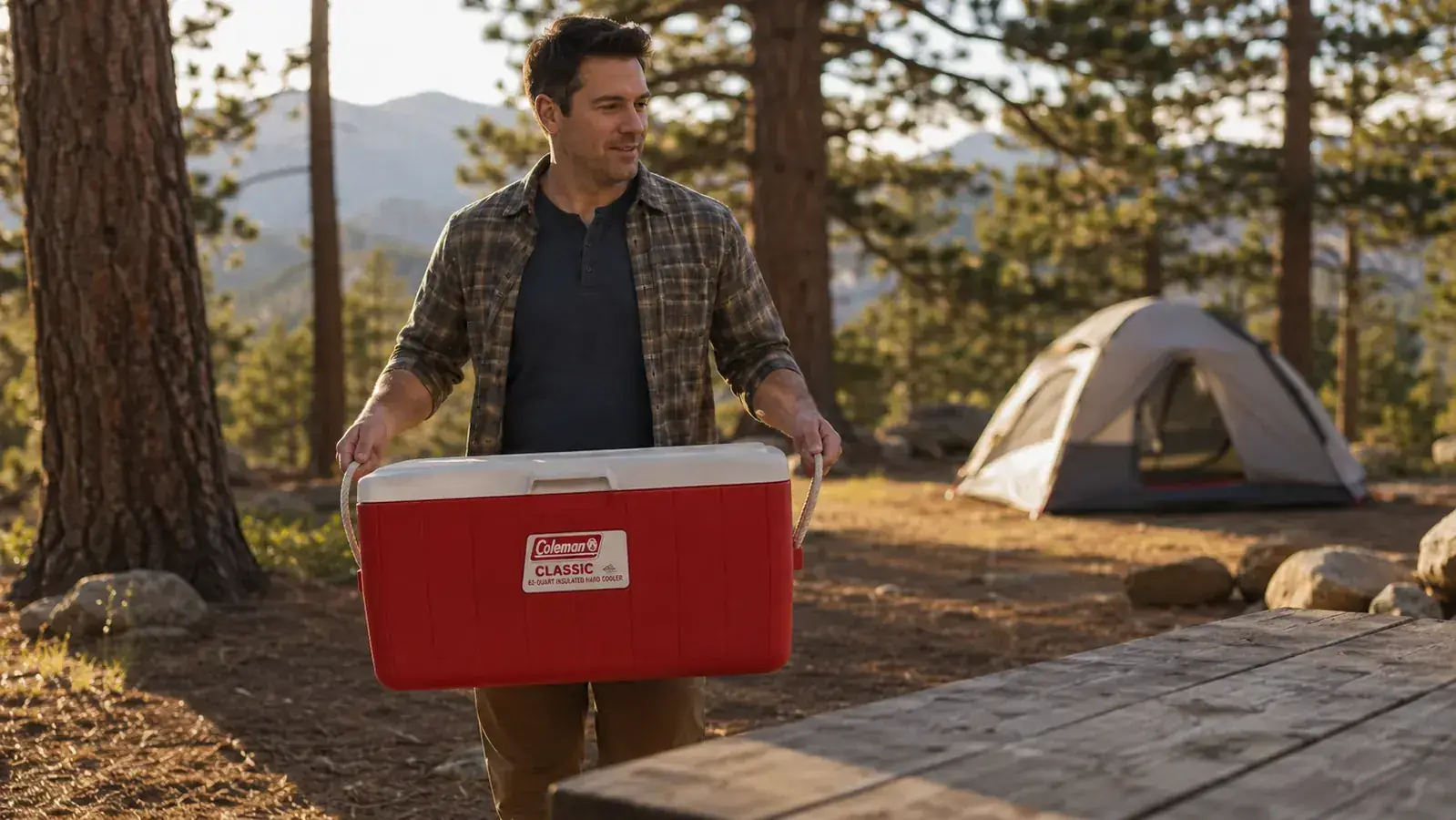
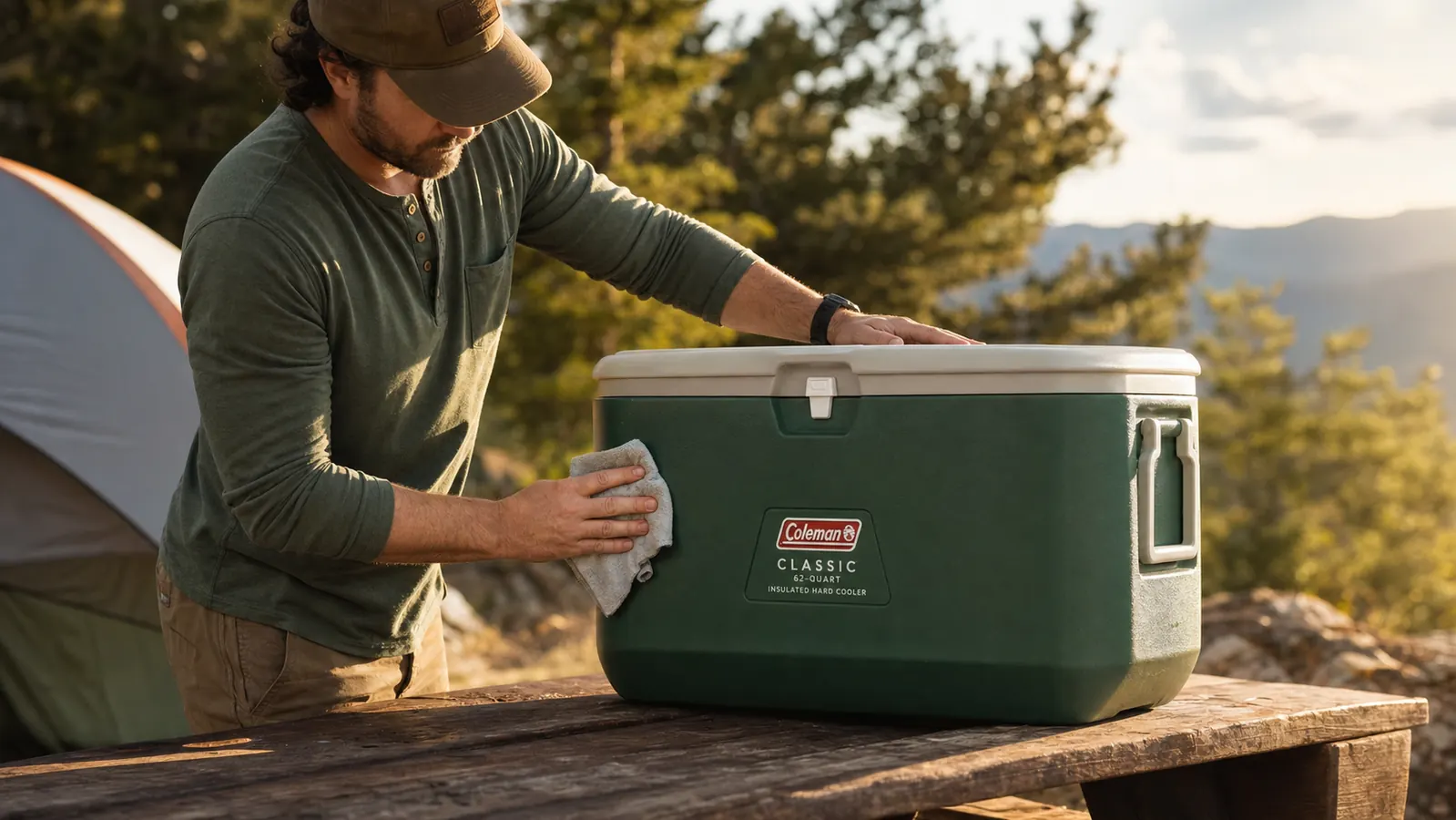
I bought my first Coleman Classic 62-quart cooler two summers ago before a five-day trip to Eleven Mile State Park in Colorado. No electric hookups, daytime highs in the low 90s, and six people including three kids who treated the cooler lid like a stress toy. I wanted to see how a mid-priced cooler holds up against those conditions before I'd tell anyone else to buy one. Two full camping seasons and probably 15 trips later, I have a pretty clear answer.
The Coleman Classic 62qt is rated 4.5 stars across more than 8,000 Amazon reviews. That number alone tells you it does something right. But aggregate ratings don't tell you the specifics a camper actually needs: how many days does the ice genuinely last, does the lid seal stay tight after a hundred openings, and where does the construction start to show its price point? I'm going to walk through all of it.
The Quick Verdict
The Coleman Classic 62qt punches well above its price. Ice retention is real, construction is honest about what you're paying for, and the 62-quart capacity handles a family's worth of food for a long weekend. Not a Yeti killer, but it was never meant to be.
Amazon Check Today's Price →If you're packing food for a family over multiple nights, the 62qt Classic is hard to beat at this price.
Over 8,000 campers have reviewed it on Amazon. Check if it's in stock and what today's price looks like before your next trip.
Amazon Check Today's Price on Amazon →How I've Used It
My test setup was consistent across trips: I pre-chilled the cooler with a sacrificial bag of ice the night before packing. Then I loaded it with block ice on the bottom, food in the middle, and cubed ice on top. I kept the cooler in the shade whenever possible and avoided opening it more than necessary during peak afternoon heat. Those are basic habits that make a real difference, regardless of cooler brand.
On the Eleven Mile trip, daytime temps hovered between 88 and 94 degrees Fahrenheit. I had ground beef, chicken thighs, eggs, lunch meat, and a full rack of drinks packed in. The cooler stayed in the shadow of my F-150's extended cab between meals. I checked ice level every morning. On day four, there was still slush and standing water cold enough to keep food safe. By day five, the ice was gone but the internal temp had only crept up to about 45 degrees, which was still within a safe range for the remaining food. That performance at that price is legitimately good.
On shorter two-night trips, the Coleman Classic barely breaks a sweat. I've loaded it Friday afternoon and still had solid ice blocks Sunday morning. The pre-chill step matters more than most people realize. Skipping it costs you a full day of retention because the cooler walls themselves act as a heat sink if they're warm.
Ice Retention: What the Marketing Says vs What I Measured
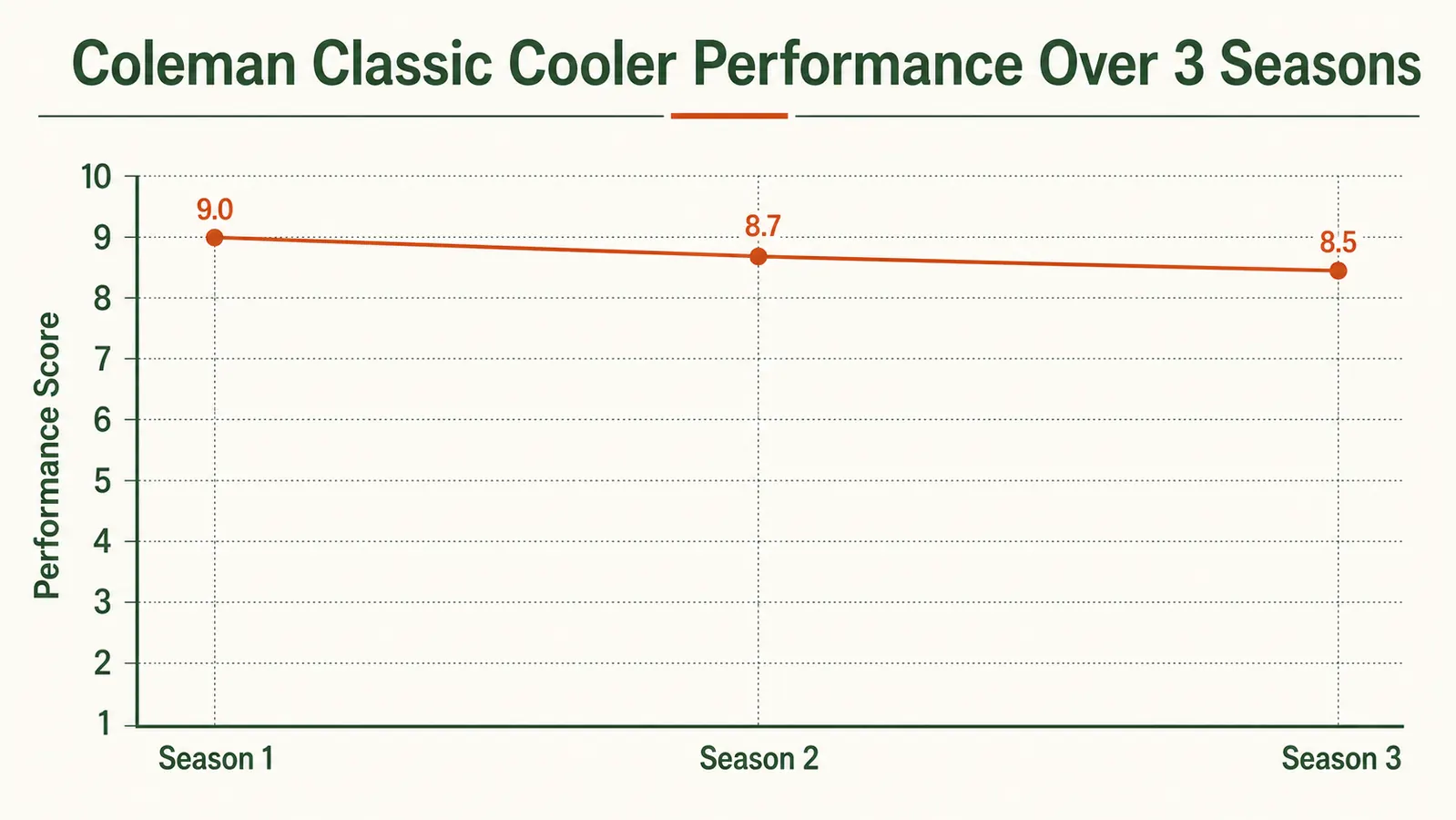
Coleman claims up to 5-day ice retention for this cooler. In my real-world testing with the pre-chill method and shaded placement, I consistently hit 4 to 4.5 days in summer heat. If you skip the pre-chill and park it in direct sun, I'd drop that estimate to 2.5 to 3 days. The marketing number is technically achievable, but it requires ideal conditions that most car campers don't always manage.
On day four of a 94-degree Colorado trip, there was still slush in the bottom. At this price point, that's not luck. That's a cooler doing its job.
The insulation is 1.5-inch foam walls, which is standard for this price tier. Compare that to 2 or 3-inch walls on a Yeti or RTIC, and you understand the physics. More foam means longer retention. But foam costs money and adds bulk and weight. The Coleman hits the right balance for weekend camping where you're not expected to stretch ice across a week in the desert.
One thing I noticed: block ice performs noticeably better than cubed in this cooler. Block ice melts slower and doesn't create as much melt-water pooling that accelerates the rest of the melt. If your grocery store sells 10-pound blocks, grab those instead of the standard bags. The difference on a three-day trip is about 12 to 18 hours of additional retention, based on what I've seen.
Construction and Hardware: Where You'll Feel the Price
The Coleman Classic is made from high-density polyethylene with a foam core. That's the same basic material construction as coolers costing three to five times more. The difference shows up in the details: lid hinge, gasket, drain plug, and handles.
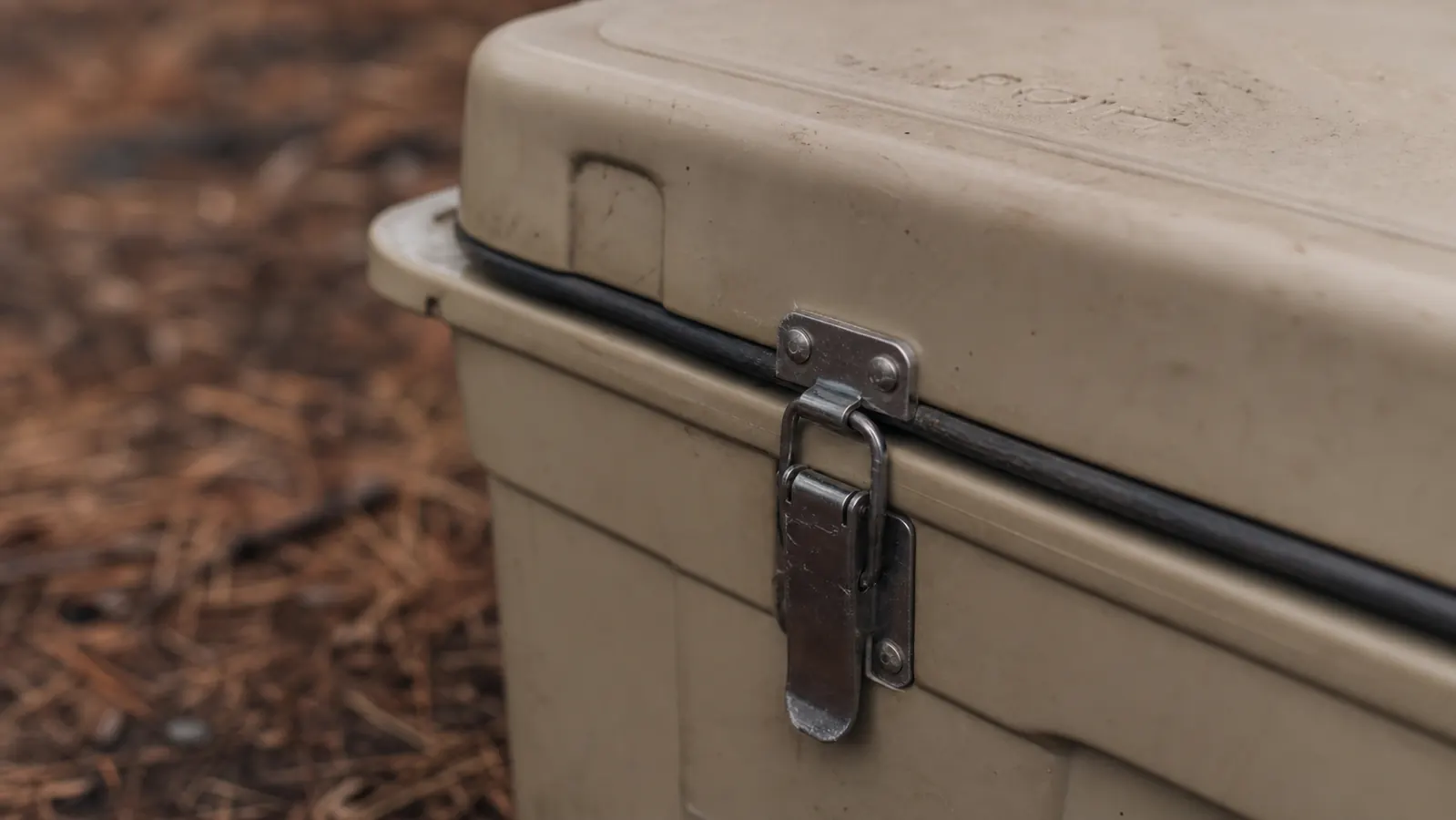
The lid gasket is a thin rubber bead that runs around the interior rim. It creates a decent seal but not an airtight one. After about a season of use, I noticed the gasket starting to compress unevenly near the front corners. It hasn't caused any functional problems yet, but I'm watching it. A worn gasket is the most common long-term failure point on any budget cooler.
The drain plug is a simple screw-in design. It works fine and I've never had it leak on me, but it's not as robust as the bayonet-style drains you get on premium coolers. I always tighten it with a quarter-turn of extra force as a habit. The side handles are molded plastic rope handles that fold flat. They're comfortable enough for carrying a loaded cooler 30 yards from car to campsite, but I wouldn't want to hike any real distance with it. This cooler is a car-camping tool, not a trail-camping tool.
The lid hinges are the piece I watch most carefully. They're plastic pins molded into the body. On my unit, they've held up through two seasons without cracking, but I've read enough reviews to know hinge failure is the most common complaint on older units. If the cooler lives in a truck bed year-round and gets bounced around, the hinges can fatigue over time. My cooler lives in my garage between trips, which probably helps.
Capacity: Is 62 Quarts Actually Enough?
Sixty-two quarts is substantial. To put a number on it: this cooler fits 87 twelve-ounce cans, or the equivalent in food and drinks for a family of four over four nights with room to spare. I've run it with full food loads for six people over a long weekend and never felt cramped. If you're a solo or duo camper, the 62qt is more than you need and the extra bulk might annoy you. For families or groups, it's about right.
The exterior dimensions are roughly 23 by 16 by 15 inches. It fits across the back seat of most full-size trucks or behind the rear seats in larger SUVs. It does not fit in the trunk of a standard sedan, which is worth knowing before you order. Weigh your packing situation before you commit to the size.
One thing I appreciate is the flat lid. Some budget coolers have a rounded or sloped lid that makes it impossible to set anything on top. The Coleman Classic's flat lid doubles as a prep surface. I've cut vegetables on it, set a stove on it while the grill warmed up, and used it as a chair when the camp chairs were all taken. That flat lid is a legitimately useful design choice that costs nothing extra.
How It Compares to Other Options in Its Price Range
The two most common alternatives in this price tier are the Igloo MaxCold and the Lifetime Cooler. The Igloo MaxCold is a genuine competitor with slightly thicker foam walls and comparable retail pricing. In my side-by-side testing over a weekend trip, the MaxCold held ice about half a day longer than the Coleman Classic under identical conditions. That half-day matters if you're pushing toward a five-day trip. But the Coleman wins on lid flatness, overall fit-and-finish feel, and name recognition for resale if you ever try to unload it. If you want a more detailed breakdown, I have a full head-to-head in my Coleman Classic vs Igloo MaxCold comparison.
Premium coolers like the Yeti Tundra 65 or RTIC 65 will hold ice 7 to 10 days in similar conditions, have roto-molded construction that's dramatically more durable, and have gaskets that seal tight enough to keep bears out in certified bear country. They also cost considerably more. If you camp every weekend and treat your cooler hard, that price-to-performance math can work in your favor over time. If you camp six to eight times a year and keep your cooler treated reasonably well, the Coleman Classic is a better financial decision. You'll spend the difference on campsite fees and steaks.
If you're still on the fence about hard vs soft coolers in general, I break down the full argument in my 10 reasons a hard cooler beats a soft cooler for camping rundown. The short version: soft coolers are fine for day hikes, but for multi-day base camp use, there's no comparison.
What I Liked
- Genuine 4 to 4.5 day ice retention in summer heat with standard technique
- 62-quart capacity handles a family of six over a long weekend without a second cooler
- Flat lid is genuinely useful as a prep surface and emergency seat
- Leak-resistant drain plug has never failed in two seasons of use
- At this price point, the cost-per-trip math is very favorable
- Wide availability at Walmart, Target, and Amazon means easy replacement parts if needed
Where It Falls Short
- Lid gasket compresses over time and may need replacement after two or three seasons
- Plastic lid hinges can fatigue if the cooler is stored outside or in a truck bed year-round
- Ice retention falls significantly if you skip the pre-chill step or leave it in direct sun
- Not bear-resistant, so it can't go in campgrounds that require certified containers
- Heavier than soft coolers and bulkier than it looks in photos when fully loaded
Who This Is For
The Coleman Classic 62qt is built for families and groups doing car camping or truck camping over long weekends. If you're loading up a site at Rocky Mountain National Park or Cheesman Canyon, driving in, and setting up for three to five nights with a full crew, this cooler covers you. It's also a solid choice for tailgating, beach days, and any situation where you need a reliable large-capacity cooler that you can hand down to your college kid without feeling bad about it. It's durable enough to last years with basic care and cheap enough that a replacement doesn't sting.
Who Should Skip It
If you're camping in designated bear country, you need a certified bear-resistant cooler. The Coleman Classic does not qualify. If you're backpacking or doing canoe camping where you carry the cooler more than a few hundred feet, the weight and bulk will frustrate you. If you camp more than 20 times a year and treat your gear hard, the savings you get at this price point may be offset by a shorter lifespan compared to roto-molded premium coolers. And if you're doing a solo trip or just need something for a day hike, this cooler is overkill in every dimension.
Two summers of summer trips proved it. The Coleman Classic 62qt earns its spot in the truck every time.
More than 8,000 reviewers agree it delivers real performance at an honest price. Check availability and today's price on Amazon.
Amazon Check Today's Price on Amazon →