
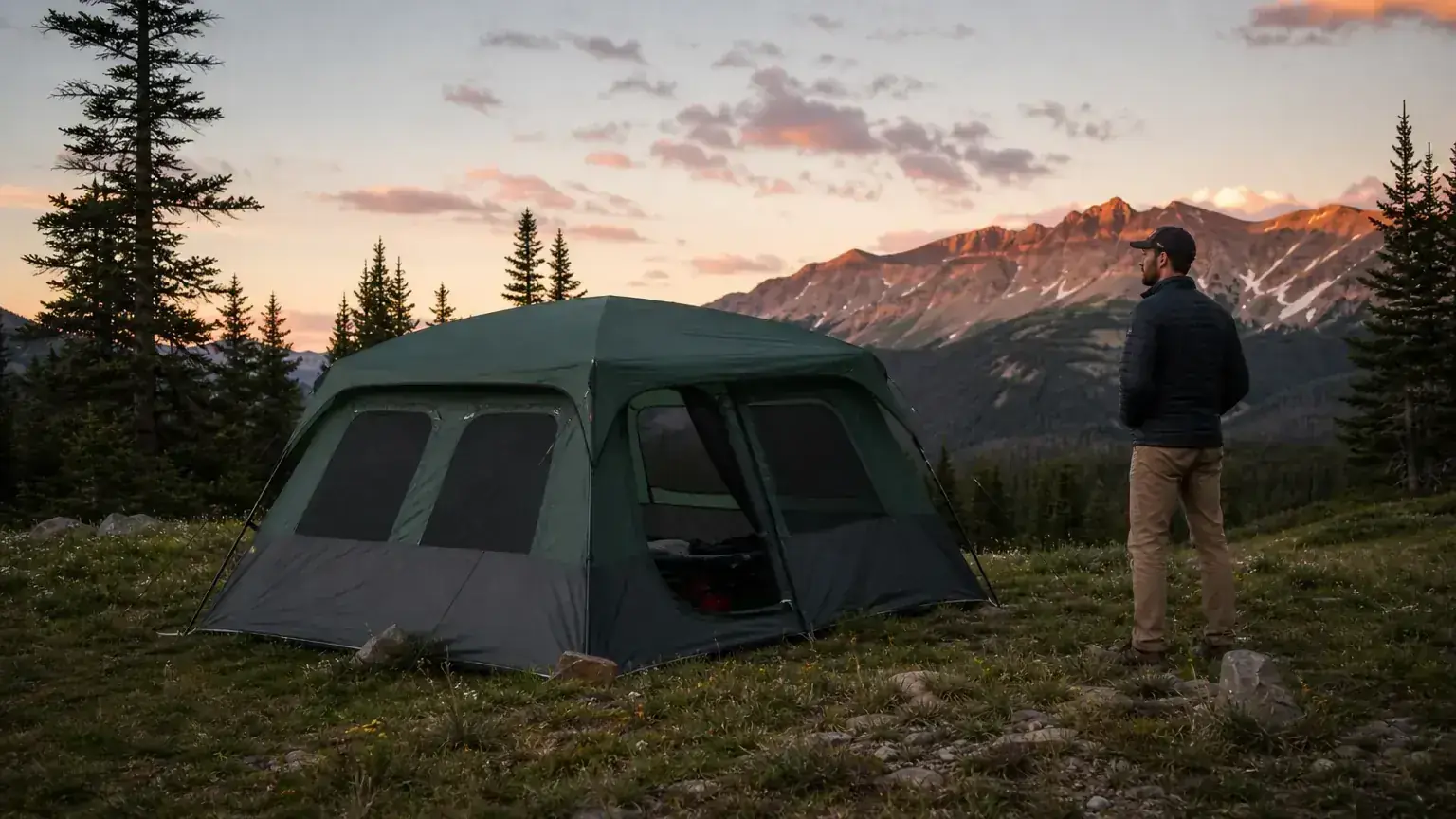
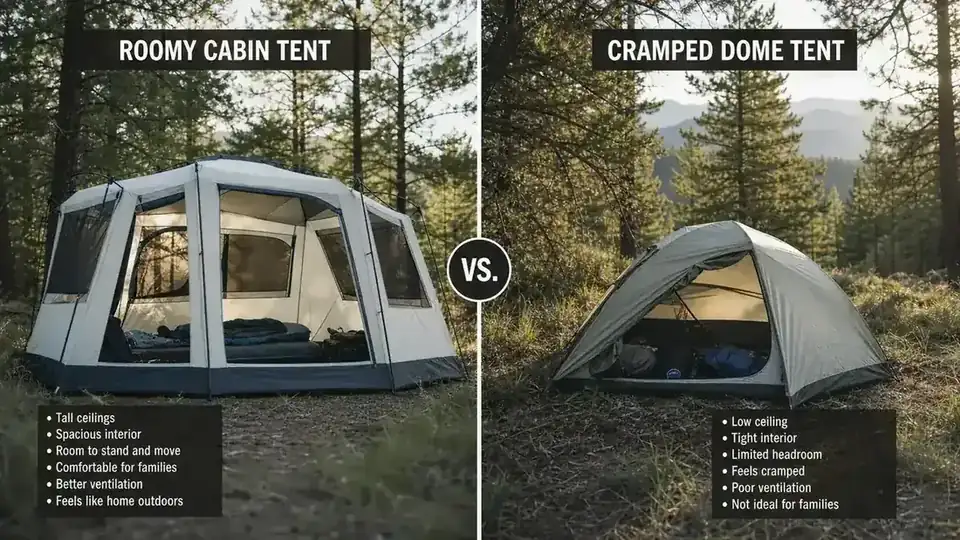
I spent three summers dragging a 6-person dome tent to campgrounds across Colorado before a buddy showed up at Rocky Mountain National Park with a Coleman Montana cabin tent. I walked inside, stood up straight without hunching, and immediately felt like an idiot for all those years bent over in a nylon cave. The dome tent wasn't broken. It just wasn't built for families who car camp with real gear and want to spend more than 30 seconds standing upright.
Dome tents have their place, specifically on a backpacking trail where every ounce counts and you're not spending much time inside. For car camping with kids, a cooler, extra bags, and gear you actually want to access? A cabin tent is a different category of product. Here are the 10 reasons I stopped going back.
The tent that finally made car camping feel like camping, not camping in a collapsed bubble.
The Coleman Montana 8-person has 4,590 Amazon reviews, near-vertical walls, and a center height that lets adults walk around without stooping. Check today's price below.
Amazon Check Today's Price on Amazon →You Can Actually Stand Up
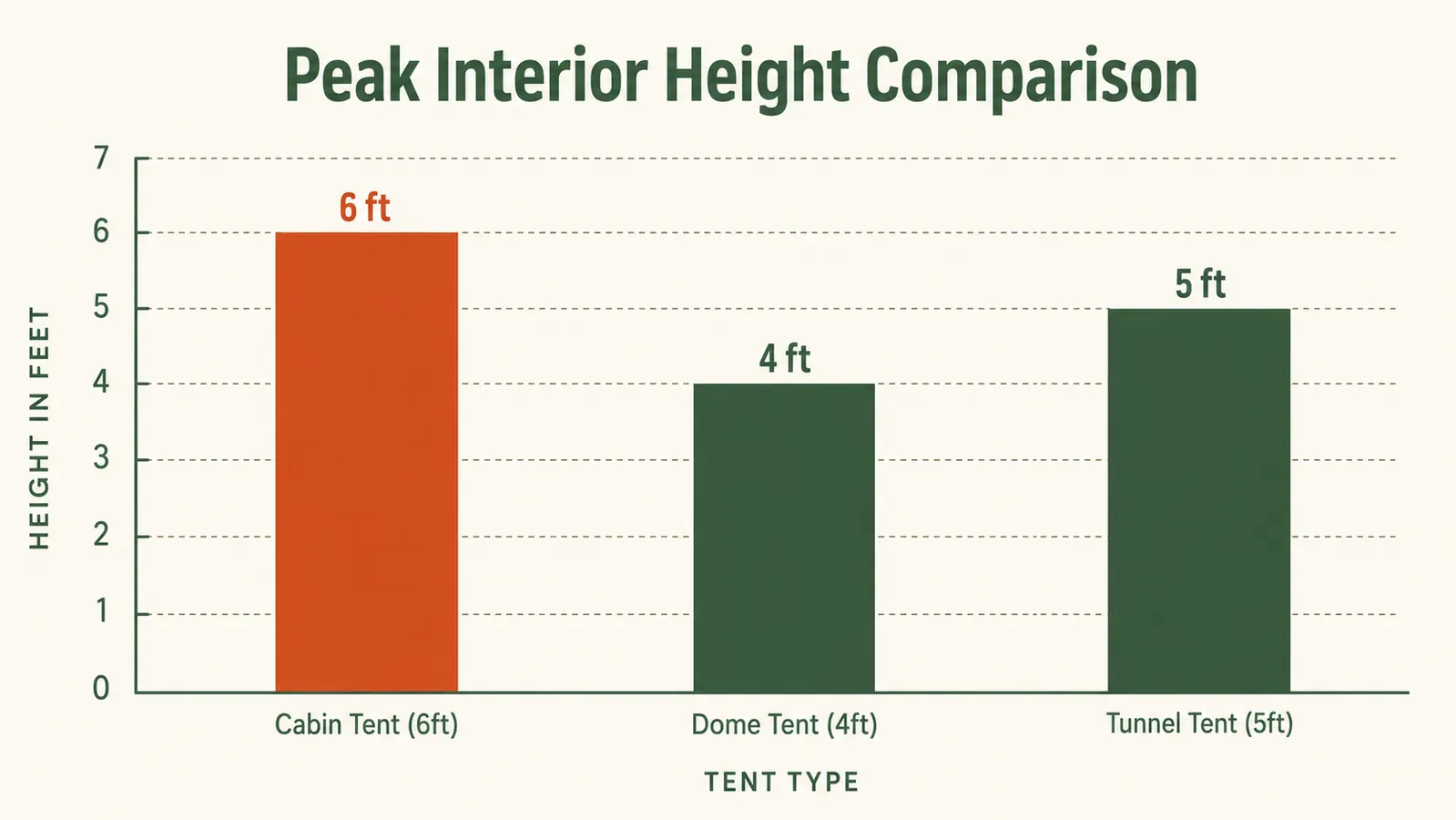
The Coleman Montana has a 6-foot center height. That's not marketing copy, that's measured at the peak. With near-vertical walls, you're standing upright across most of the floor, not just the center strip. In a comparably sized dome tent, the livable zone where you can stand is maybe 18 inches wide. With three kids changing clothes and a partner digging through a bag, that's a significant daily quality-of-life difference.
The Floor Space Is Actually Usable
A dome tent's curved walls slope inward from the ground up. You end up losing a foot or more of usable width on each side because the wall is pressing against your sleeping bag. Cabin tent walls are nearly plumb, so the floor area matches what's advertised. On the Montana, that's 10 x 14 feet of flat, usable floor. You can fit six people sleeping or rearrange it as a mix of sleeping and storage without anyone ending up with a wall in their face.
Getting Dressed in the Morning Isn't a Wrestling Match
This sounds minor until you've tried to pull on hiking pants while lying flat because sitting up puts your head against the tent wall. In a cabin tent you sit, stand, and move like a normal person. With kids especially, the difference in morning friction is real. Less chaos, fewer elbows in faces, no one sitting on a pile of shoes because there's nowhere else to put them.
Gear Storage Becomes Manageable
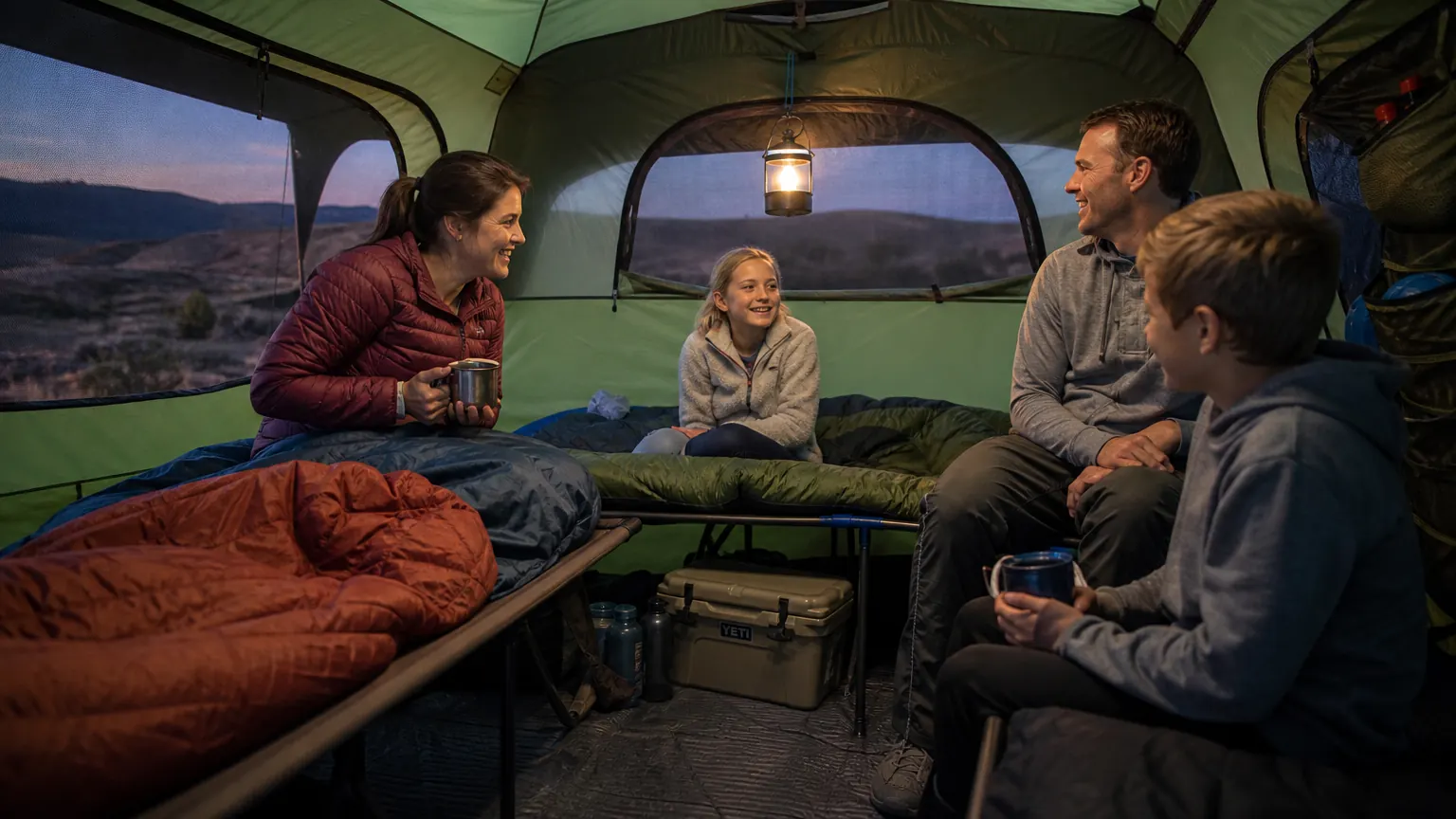
When you camp with kids you carry twice the gear you think you need. A dome tent has nowhere to put any of it except on top of sleeping bags or shoved against sloped walls. The Montana's vertical walls mean you can line the perimeter with bags and bins and still have clear walking space in the middle. I've run this setup with a family of five and a medium-sized dog, and it works. Read my full two-season review of the Coleman Montana for specifics on how I organize the interior.
Setup Is More Intuitive
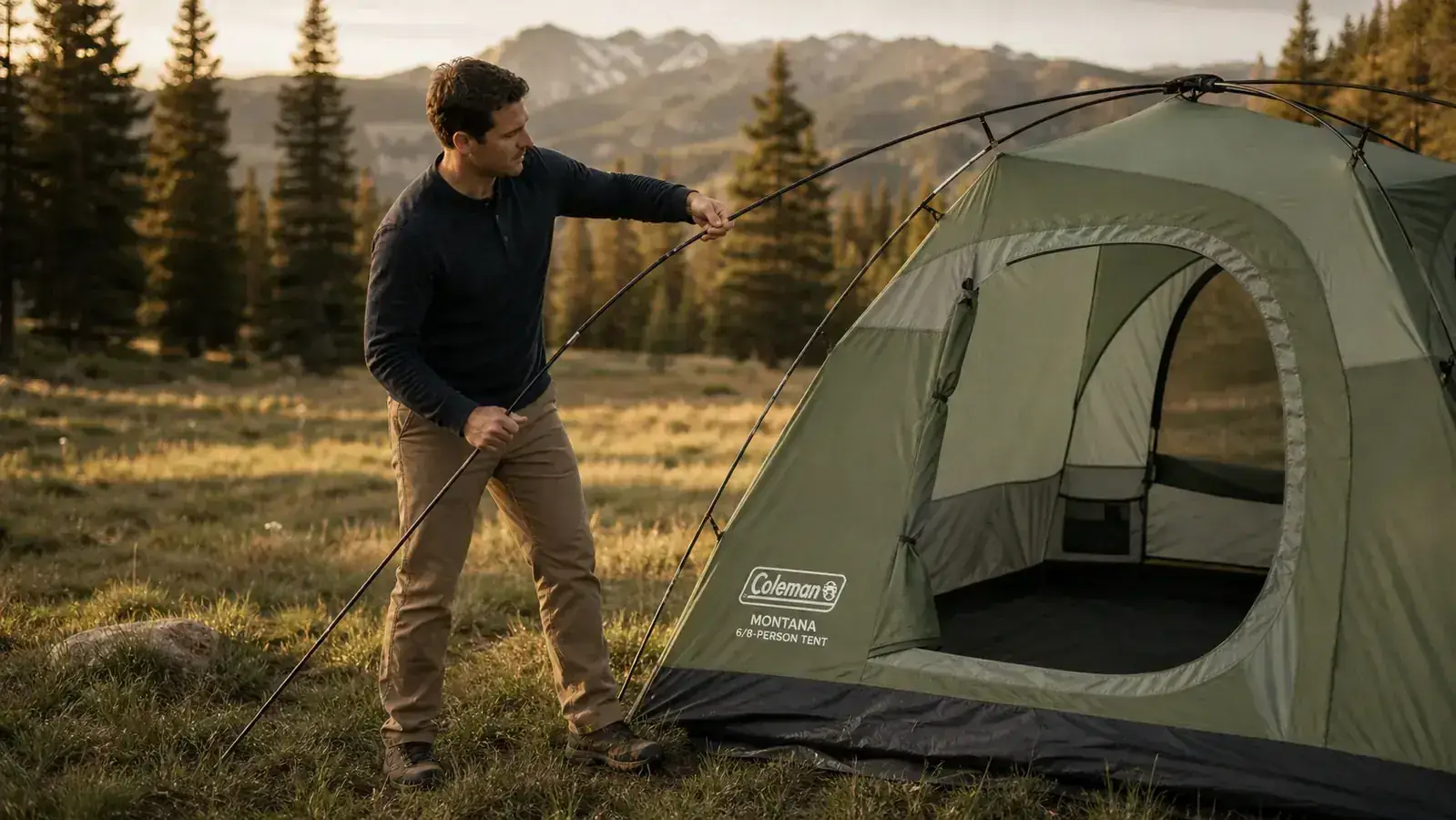
Dome tents require bending poles into arcs and threading them through narrow sleeves, then fighting to stake out the corners before the whole thing collapses again. Cabin tents use straight pole segments that slot into corner clips and lock into position. The Montana's E-port frame system goes up in sections, and because the structure is box-shaped, there's less guesswork about which pole goes where. I can pitch mine solo in about 20 minutes. If you're wrestling with it, the step-by-step setup guide covers solo pitching in detail.
Ventilation Is Better by Design
Dome tents often have one or two windows and a single door. Cabin tents typically run windows along multiple walls, closer to standing height where it matters. The Montana has windows on all four sides plus a mesh ceiling panel. On warm nights in Colorado's lower elevations you can open everything and actually move air through the tent, which matters for sleeping comfort. Dome tents trap heat because the only meaningful vents are at the top of a curved canopy.
A Lantern Hangs Where You Need It
Cabin tents have a center loop at or above head height. Hang a lantern from it and you get overhead light that fills the whole space. In a dome tent, that loop is in the middle of a curved ceiling, so the lantern swings when anyone moves and the light catches the tent walls awkwardly. It's a small thing that compounds into better evening functionality, whether you're reading to kids or sorting gear for the next morning.
Rain Performance Is More Predictable
Dome tents rely on tension and pole flex to shed water. If a seam loosens or a pole bends wrong, the geometry changes and water pools. Cabin tents like the Montana use a separate rainfly that drapes over a rigid rectangular frame. The fly hangs away from the tent body, creating an air gap that improves condensation management. I've had the Montana out in extended Colorado thunderstorms and the inside stayed dry. The tradeoff is that the fly needs to be tensioned properly, but that's a five-minute job with the included stakes.
You Can Divide the Space
Some cabin tents, including certain configurations of the Montana, include a room divider so you can create two separate sleeping areas from one tent. That's not possible in a dome. For families with older kids who want their own space, or for trips where you're sharing with friends, that wall matters. It doesn't soundproof anything, but it gives everyone a visual boundary that helps at bedtime.
The Value Math Works Out
The Coleman Montana runs in the mid-range at current pricing. A comparable 8-person dome tent from a name brand costs within that same range. You're not paying a premium for the cabin design, you're just choosing between two philosophies. If you camp more than twice a year with family, the cabin tent pays back in comfort within the first trip. The dome only wins if you're counting ounces, and at car camping weights, no one is.
What I'd Skip
The one real downside to cabin tents is wind resistance. The vertical walls act like sails in high-wind conditions. If you camp above treeline, in exposed desert flats, or at coastal sites that regularly see sustained gusts over 30 mph, a lower-profile dome tent handles those conditions better. The Montana's frame is solid enough for the campground weather I encounter in Colorado's Front Range, but I wouldn't take it above 11,000 feet in shoulder season. Know your conditions. If you camp in sheltered forest sites or established campgrounds with tree cover, none of that is relevant.
I walked inside, stood up straight without hunching, and immediately felt like an idiot for all those years bent over in a nylon cave.
Done hauling a cramped dome tent? The Coleman Montana is the straightforward upgrade.
Rated 4.4 out of 5 stars across more than 4,500 Amazon reviews. Near-vertical walls, 6-foot center height, and a separate rainfly that actually works in rain. Check today's price and current availability below.
Amazon Check Today's Price on Amazon →